

The best performance improvements are often the ones you stop noticing.
Search comes back quickly. Browsing feels immediate. Scrolling keeps up with you. Roon remains just as responsive after running for days as it was when you first opened it.
Making that experience faster, smoother, and more reliable has been one of the largest areas of focus for our engineering team over the past six months.
This has not been one project or one dramatic fix. We have looked across Roon from top to bottom. The work has included tracking down memory leaks, reducing unnecessary processing, improving caching and database access, rebuilding parts of search, refining rendering and scrolling, and modernizing the technology underneath our applications.
Many of these changes have already reached Roon through recent releases. Others are still moving through Early Access and ongoing development.
Together, they support one simple goal:
Roon should spend less time managing itself and more time responding to you.
Doing Less Work to do the Same Job
Roon is continuously organizing your library, combining local and streaming content, preparing metadata for browsing, communicating with remotes and audio devices, responding to library changes, and rendering a highly visual interface.
Over time, small inefficiencies can accumulate.
We found cases where data remained in memory after it was no longer useful. This forced Roon to spend more time cleaning it up. In other places, Roon was rebuilding information that could be reused, retaining duplicate copies of the same data, or holding resources after a remote disconnected.
These different problems can feel very similar to the person using Roon. Actions take longer, browsing becomes heavier, or an application that started quickly becomes less responsive over time.
We have addressed dozens of these issues across some of Roon’s most frequently used pathways. In several places, we went beyond fixing an individual problem. We redesigned the underlying system so that the same type of issue is less likely to return.
A Faster Foundation for Search
We have written before about the evolution of Roon Search, and that work has continued behind the scenes.
More recently, we focused on the local search engine running inside Roon Server. As libraries grew, we found that the previous implementation could become inconsistent. Most searches returned quickly, while others required considerably more time and resources than they should.
Rather than continuing to work around those limitations, we replaced that part of the system with a modern search engine designed for fast and efficient workloads.
The goal was not to change what Roon finds or how results are ranked. It was to make the work underneath those results faster and more predictable.
The result is faster and more consistent local search, particularly for larger libraries. It also reduces pressure on Roon Server’s memory and processing resources.
Making Roon Feel Faster
Performance is not only about memory usage, database queries, or how quickly a server completes a task. It is also about what happens between your finger and the screen.
Recent work has addressed long standing scrolling issues in large lists, reduced unnecessary processing during navigation, and improved how Roon renders parts of its interface.
On supported phones and tablets with 120Hz displays, Roon Remote can now take better advantage of higher refresh rates. This helps scrolling feel more natural and responsive.
There is still more work to do. Rendering performance depends on a complicated combination of operating system, device, graphics hardware, display, and the particular screen being used.
That is why we do not think about this as a single performance release. When we find friction in something people do every day, we want to understand its cause and remove as much of it as possible.
Modernizing What Is Underneath Roon
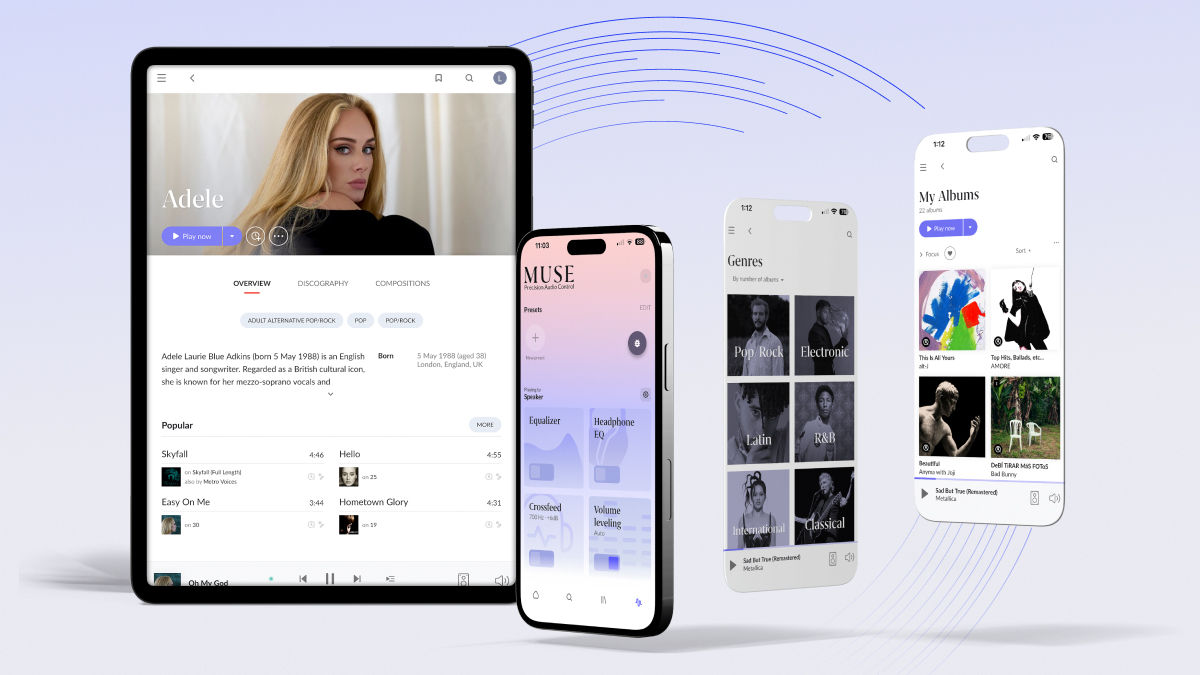
Alongside these performance improvements, we have been modernizing the technology foundation used across Roon.
One important part of that work is our move to .NET 10.
Roon Server and the Roon desktop applications made the transition first. Roon Remote for iPhone, iPad, and Android followed with Roon 2.70. This replaced an older runtime that had supported our mobile applications for many years.
The name of the framework is not really the important part. What matters is what a common, modern foundation allows us to do.
Maintaining different generations of technology across closely related applications creates complexity. Engineers spend more time supporting different implementations and working around the limitations of older systems. That leaves less time for improving the experience itself.
Modernizing this foundation gives us better tools for diagnosing problems, removes older platform specific workarounds, and makes it easier to improve Roon consistently across desktop, server, and mobile.
This approach extends beyond .NET. Across Roon, we have been replacing older systems where better solutions now exist, improving how we cache and access data, simplifying internal infrastructure, and modernizing the tools we use to build and test Roon.
This is not modernization for its own sake. It is about making Roon easier to improve.
Roon Bridge Is the Next Step
Roon Bridge is the final major part of our transition to .NET 10.
Early Access testing of the updated Roon Bridge begins in July, with the production release scheduled for August 30, 2026.
For most people, this will arrive as a normal update. However, moving Roon Bridge to the modern foundation introduces new minimum requirements for macOS and Linux.
Beginning August 30:
- Roon Bridge on macOS will require macOS 12 Monterey or later.
- Roon Bridge on Linux will require glibc 2.27 or later and OpenSSL 1.1.1 or later.
- Windows users are not affected by these particular compatibility changes.
Most current systems already meet these requirements. If you run Roon Bridge on an older Mac or Linux device, including a Raspberry Pi or another small computer, we recommend checking its operating system before the production update.
You can find instructions for checking your system and available options in our Roon Bridge minimum system requirements announcement.
This transition does not change your Roon subscription, music files, library, playlists, tags, favorites, listening history, or Roon’s bit-perfect playback.
Performance Work Continues
Roon is in a substantially better place than it was six months ago. It performs better today, and we are better equipped to understand and improve it tomorrow.
Much of that progress would have been harder without your help. Many of you sent diagnostics, described patterns, tested fixes, and returned with more information when something still was not right.
Our Early Access community has been especially important. Issues were caught, reproduced, and better understood because people were willing to test prerelease software in their own systems before it reached everyone else.
The result is not one feature we can point to on the screen.
It is a search that comes back faster. A library that remains responsive. A screen that moves with you. A system that spends less time cleaning up after itself and more time doing what you asked.
Underneath it all is a stronger foundation that gives us more room to keep improving.